What We Learned at IgniteIt LA
Company News · By Headquarters · October 14, 2026
On October 7, our team spent the day at IgniteIt's Market Spotlight: California 2026 at Hotel Indigo in downtown Los Angeles. It was a one-day event with more than 70 speakers, and a much smaller crowd than the big trade shows. That turned out to be the point.
California is coming off three straight years of falling sales. Licensed retailers reported $3.9 billion in 2025, down from $4.2 billion in 2024. The latest numbers suggest the slide has stopped, not reversed: Headset put September sales at $329.5 million, up about half a percent on the year. Units were up 8.1%, but the average item sold for $17.72, down from $19.06. Shoppers are back. Their spending per item isn't. Here's what stood out from a room full of people trying to figure out what comes next.
The agenda read like a balance sheet
Right after Headset's look at the California market, the first full session was "Cash Is King, Credit Is Queen: A Playbook for Financial Health in California Cannabis." Then came "Sell, Merge, or Survive," "Worth the Bet: Building a California Company Capital Can't Ignore" and, after lunch, "The Investor's Checklist: Retail Excellence Under the Microscope."
Four sessions on cash, capital and consolidation, and the day opened with liquidity, not product. "Cash is king" was also the phrase our team heard most in conversations off the stage.
The speakers didn't all agree on what comes next, but nobody defended the status quo. California State Treasurer Fiona Ma called Prop 64 a "complete disaster" for licensed operators and said she would help organize stakeholders around changes. Gubernatorial candidate Steve Hilton and former state Senator Steven Bradford also spoke about the state's regulatory environment.
The supply chain panel put the cash problem in concrete terms. Bill Levers of Beard Bros argued that distributors may keep only 10% to 20% of a producer's wholesale price while handling storage, retail accounts, deliveries and collections, sometimes going back to a store again just to get paid. Wesley Hein, president of the California Distribution Association, put the blame on the regulatory structure rather than on distributors. Either way, in California, the distributor is often also the collector, and every late payment from a retailer moves back up the chain.
!A conversation on the Beard Bros Media stage at IgniteIt California 2026 in Los Angeles
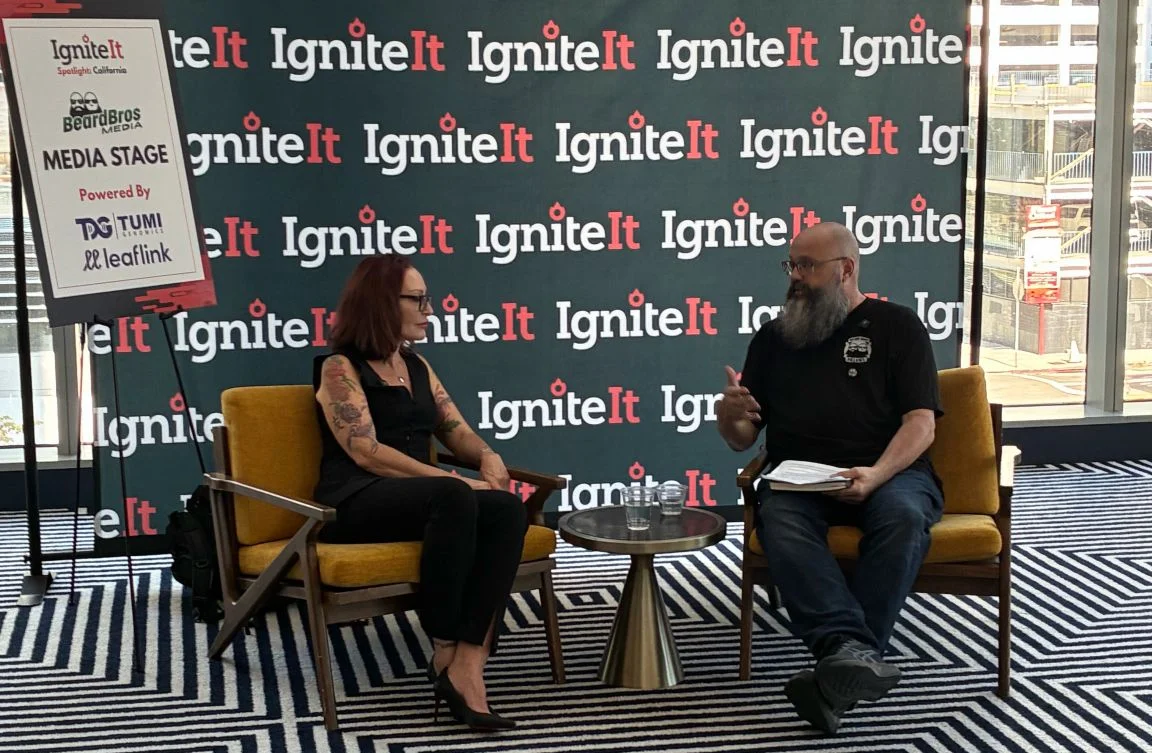
The beverage panel got to the same issue from the shelf side: taxes and distribution costs push dispensary prices high enough to slow adoption. Next to "California is SO Back" on the agenda sat "Where the Money Goes: Why California's Cannabis Supply Chain Still Doesn't Work." The data supports both moods.
Operators are building their own data tools
The most impressive thing we saw all day wasn't on stage. A brand operator walked us through AR and CRM dashboards his team built in-house in two to three months. His distribution data lands in a database the company already had, and the dashboards are built on top of it. They show exactly what he'd want to know before making a decision, because he designed them himself.
One idea he's pushed for is worth stealing: tie collections to delivery. When an order goes out for delivery, the sales rep and the AR team both get a notice, so the payment conversation happens while the product is arriving, not 30 days later when the invoice is already late.
This fits the afternoon session "Who Decides What's Next? Data, Tastemakers, and California Consumer Demand." Data, retail and delivery were the themes our team kept hearing about. The bar for back-office reporting is rising, and operators with the technical depth aren't waiting for vendors to catch up.
Compliance wants to get simpler
The state's regulator had its own slot: "California's Next Regulatory Chapter: A Conversation with the DCC Director." In one conversation with the compliance-technology side of the industry, the stated priority was simplifying systems and making them easier to use. Systems that are easier for licensees to use mean fewer reporting errors, and fewer errors mean fewer of the inventory mismatches that turn into license risk.
The day also covered federal changes. "Schedule III, California Reality: What Operators Need to Know" took on the split between medical and adult-use, which we covered in detail last week.
Asset-light brands carry a hidden reconciliation problem
One conversation with a finance leader stuck with us. Her company owns no facilities. It buys product, works with co-manufacturers and third-party partners, and puts the final product together across several outside partners. That keeps capital costs low, but every partner means another set of invoices, terms and records to reconcile. In a model like that, AP stops being a payables function and becomes a matching problem.
Anyone running this model should ask how many days it takes to tie a finished unit's cost back to every partner invoice behind it.
Smaller rooms, better conversations
!Attendees talking between exhibitor tables at Hotel Indigo during IgniteIt California 2026
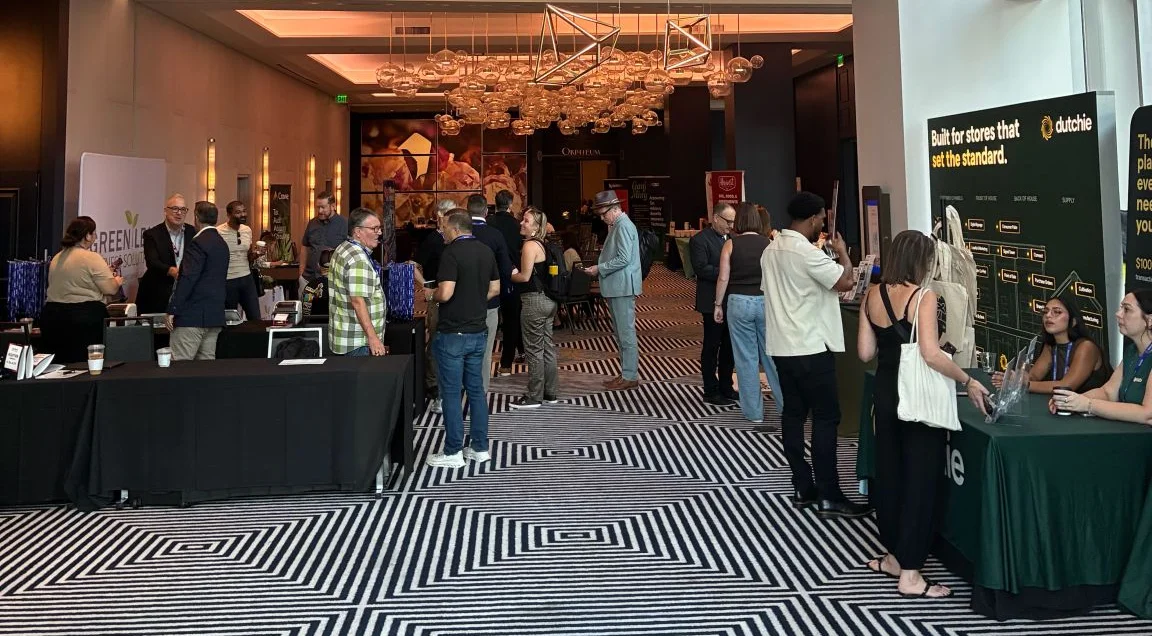
IgniteIt had one pre-party, one after-party and one main room. With fewer people, the decision makers were standing right in front of you instead of spread across a convention center. The quality of the conversations surprised us: operators, CFOs and partners, all in one room, with time to actually talk.
For operators deciding where to spend a tight 2027 events budget, that's the lesson. Pick the events where the people you need to meet can't avoid each other.
Top 5 learnings
- Cash and consolidation lead the conversation. The first full session was about financial health, "cash is king" was the line we heard most, and distributors described collecting from retailers as part of the job. Units are up 8% but prices keep falling, so plan 2027 around more volume at lower prices, not a rebound in dollars.
- The best back-office data tools are being built in-house. Operators with technical depth are building their own AR and CRM dashboards in months. Starting the collections conversation when an order ships is an idea any team can copy.
- Simpler compliance is the goal. The regulator and the compliance technology side are both talking about systems that are easier to use. Clean inventory records are the part operators control today.
- Asset-light brands trade capital costs for reconciliation work. Every co-manufacturer and third-party partner adds invoices to match. Know how long it takes to tie a finished unit back to every invoice behind it.
- Small events beat big ones for real conversations. One room, one pre-party and one after-party put the decision makers within reach. Spend a tight events budget where the people you need to meet are in the same room.
We'll be at Hall of Flowers New York on October 21-22, and we'll share what we hear there too.